There is a moment, somewhere between boarding a plane alone and rolling out a yoga mat in an unfamiliar land, when the noise of everyday life finally falls away and you hear it: the quiet, insistent pulse of your own heart calling you back to yourself.Across the world, a new kind of journey is taking shape for the modern traveler. It is less about ticking destinations off a list and more about coming home to the person you carry into every time zone. These self-love sanctuaries are intimate, slow, and profoundly personal: wooden yoga shalas wrapped in jungle mist, red-rock cathedrals humming with desert energy, oceanfront platforms where the sound of waves becomes a metronome for your breath. You come alone, but you are never truly lonely. Instead, solitude becomes a generous companion, clearing space for reflection, healing, and the kind of rest that seeps all the way into your bones.
This is travel as an act of devotion. A 12-day self-love immersion on a hill above North Bali, where incense curls into the dawn. A women’s retreat in the embrace of Sedona, where guided hikes and energy work help you shed old stories beneath a sky streaked with desert light. A jungle-framed yoga journey on Costa Rica’s Osa Peninsula, where howler monkeys become your alarm clock and low tide reveals a secret shoreline. A high Himalayan lodge where the air is thin but the sense of connection feels incredibly dense. And a wellness retreat in Nara, not far from Kyoto, where temple bells and tea ceremonies invite you to experience stillness as an art form. What follows is a passage through five such sanctuaries, each one tuned to the quiet, necessary act of learning to love yourself again.

Bali's Embrace: A Journey Inward at Santhika Dream Hill
Even before you see it, you can smell Santhika Dream Hill Retreat Center on the breeze. As your car winds up from the black-sand coast of Lovina into the lush folds of North Bali, the air shifts from salty to floral, thick with frangipani and the faint sweetness of burning incense. By the time you arrive at the wooden hilltop complex, the island feels as if it has lifted you above your old life and set you gently down in another dimension: teak walkways creak softly under bare feet, the jungle murmurs on all sides, and far below, the sea glimmers like a promise you no longer have to chase.
The 12-day self-love retreat here is not a quick escape; it is a slow unfurling. Mornings begin before the sun fully rises, when the sky is a pale wash of lavender and the only sounds are roosters in the village below and the quiet clink of cups in the open-air restaurant. You pad up wooden steps to the yoga shala, perched high among palm crowns, where floor-to-ceiling openings frame the horizon. As you sink into your first downward dog, the scent of sandalwood incense drifts through the space, mingling with the humidity and the earthy smell of polished wood warmed by years of sun. Gamelan music, soft and shimmering, plays in the background, its chiming tones turning each breath into something that feels both personal and sacred.
Classes are intimate, often guided by teachers who fold traditional Balinese philosophies of balance and devotion into familiar asanas. This is not a place where you push for deeper backbends or perfect handstands. Instead, the practice is about listening: to your hamstrings, to the old anxiety stored at the base of your neck, to the stories you have been telling yourself about what you should be. Between sequences, the jungle takes over the soundtrack. Cicadas thrum like a distant drumline; a gecko clicks from the rafters; somewhere far below, a motorbike buzzes along the coast road, a reminder that ordinary life is still out there, even as you temporarily slip its grip.
Afternoons are for integration. After a breakfast of tropical fruit so ripe it tastes almost perfumed—papaya, mango, dragon fruit sliced into jewel-like segments—maybe you wander to the treetop spa where therapists perform slow, intuitive Balinese massages under a high thatched ceiling. Coconut oil warmed by the sun is worked into tired muscles; flower petals float in carved stone baths that overlook the jungle canopy. Other days, you join small-group excursions to waterfalls and temples, guided not as a tourist but as a guest of the island’s spirit. At a nearby holy spring, a Balinese priest ties a white sash around your waist, chanting softly as he blesses you with handfuls of cool, fragrant water. The chill hits your forehead and trickles down your back, and for a moment you feel the tangible weight of everything you are ready to release.
In the evenings, self-love takes on a distinctly Balinese flavor at the communal tables. You sit cross-legged on cushions, sharing plates of lawar—finely chopped vegetables, coconut, and aromatic herbs—perfumed bowls of ginger-rich chicken soup, and smoky grilled fish marinated in turmeric and lime. The rice, plump and slightly sticky, carries the faint scent of pandan leaves. Lanterns swing gently in the night breeze, casting golden halos over faces flushed from the day’s heat and emotion. Conversations here are less about careers and more about courage: the courage it took to book the retreat, to show up alone, to sit in silence with thoughts usually drowned out by noise.
The true heart of Santhika, though, lies slightly off the main path. Follow a narrow trail that snakes behind the highest cabins, and you will find a hidden platform barely larger than a few yoga mats, hovering above a patchwork of rice terraces. It is the retreat’s quiet secret, a private meditation spot known mostly by the staff and the few guests curious enough to keep walking after the path seems to end. From here, the landscape unfolds in gentle green waves, water glinting between rows of young rice plants, palm trunks leaning at languid angles. At sunrise, a veil of mist clings to the paddies, and the world turns soft and silver. You sit cross-legged, incense smoldering at your side, and watch farmers move like silhouettes through the haze. The only sounds are distant birds and the slow rush of your own breath. In that suspended moment, the idea of self-love stops being an abstract concept and becomes something simple and clear: the willingness to give yourself this view, this silence, this unhurried time.
By the twelfth day, your life at home has not changed—but you have. Your body remembers the unhurried rhythm of early morning stretches, your palate craves the brightness of sambal and lime, and your heart holds a memory of that secluded terrace, where for once in your life there was absolutely nothing you needed to do but be with yourself.

Sedona's Calling: Unwind and Rewild Among the Red Rocks
Flying into Arizona, the desert looks almost monochrome—a wash of beige and rust under a fierce sky. It is not until you get close to Sedona that the landscape begins to roar with color: cathedral-like formations of layered sandstone rising from the earth in deep reds and burnt oranges, streaked with improbable bands of cream. For decades, these rocks have drawn hikers and spiritual seekers alike, people who report a subtle but unmistakable hum in the air, a sense that the land itself is charged. For women traveling solo in search of recalibration, Sedona’s retreat culture offers a powerful invitation to rewild their own inner landscapes.
On the outskirts of town, down a quiet road scented with juniper and dust, a women-only wellness retreat welcomes guests into a low-slung adobe lodge encircled by sagebrush. You arrive in late afternoon, the sun still hot on your shoulders, its warmth seeping through cotton to your skin like a slow, insistent embrace. The air smells of sun-baked stone, creosote, and the faint tang of sage that the staff have just burned in a brief smudging ritual at the threshold. Inside, cool tile floors lead to a shaded courtyard sprinkled with desert plants: agave standing like living sculptures, pots of flowering cactus, wind bells chiming softly whenever a breeze wanders through.
The rhythm of the days here traces the arc of the sun. Before dawn, you join a small circle of women on a red rock ledge, blankets wrapped around shoulders against the chill that still lingers in the desert air. The sky lightens, a pale opal that gradually catches fire along the horizon. As your guide—a local energy practitioner who has spent years studying the area’s much-discussed vortexes—invites you to breathe deeply, the first rays spill over the top of a butte and paint everything in neon gold. The warmth on your face feels almost electric. Each inhale tastes faintly metallic and mineral-rich, as if the rocks themselves have dissolved into the air.
Guided hikes take you along trails that wind between juniper trees twisted into improbable shapes and flat, open expanses of sandstone where the wind has polished the rock as smooth as old bone. Boots crunch on gravel and red dust; sometimes the path tilts just enough that you feel the reassuring pull of your muscles waking up. You pause often, not only to drink water but to drop into stillness—palms facing outward, eyes closed, letting the quiet vibrate through you. The only sounds are the distant call of a raven, the soft murmur of your guide’s voice, and the hush of wind sliding along the canyon walls.
Back at the lodge, afternoons are dedicated to more explicitly inner work: meditation sessions under shaded porticos, breathwork in cool, dim rooms scented with palo santo, energy-healing sessions that unfold slowly on massage tables draped in cotton the color of desert sand. Lying there, you feel warm hands hover over points along your spine and belly, the air just above your skin tingling faintly. Outside, the cicadas strike up their relentless chorus, a reminder that even in stillness, the world is buzzing with invisible currents.
Meals are simple but nourishing: quinoa bowls piled with roasted sweet potato and charred corn, avocado dusted with smoked paprika, fresh greens dressed with lemon and local olive oil. At night, you gather under a swollen desert moon around a low fire pit built of red stone. The flames crackle and throw sparks into the black sky, where constellations appear with a clarity city dwellers rarely see. One evening, your retreat hosts introduce you to a quiet, sun-browned man who has spent most of his life leading private vortex tours. He is not interested in spectacle; there is no megaphone, no rehearsed speech. Instead, he speaks softly about the land’s history, about Indigenous stewardship, about the importance of approaching these sites with humility rather than entitlement.
The next morning, you meet him just after sunrise for a private excursion that feels more like being invited into a secret than signing up for a tour. He drives you away from the most photographed viewpoints, down lesser-known dirt roads that thread through piñon and juniper. Eventually you park and hike along a faint trail, the sun warming your neck, the dry scent of sagebrush rising each time your boots brush against it. After a short climb, you reach a natural stone amphitheater—a smooth basin cradled by towering walls streaked with iron. He asks you to sit, place your palms on the ground, and close your eyes. The silence here is so complete that you can hear your own heartbeat in your ears. Then, slowly, you begin to sense it: a subtle swirling, like the breath of wind but with no air moving at all, a felt sense that something is turning just beneath the surface.
Whether you frame it as geomagnetic anomaly, spiritual vortex, or simply a moment of undistracted presence, the effect is potent. Tears rise unexpectedly, not from sadness but from a sudden loosening around your chest, as if some invisible armor has cracked. When you finally stand to leave, your legs feel steadier, the red earth beneath your feet more solid than it did before. Later, as you soak in a hot tub at the retreat, the sun setting in flamboyant streaks over the buttes, you realize that the true vortex might not be in the rocks at all but in the spiral of your own willingness to let go.
By the time you leave Sedona, red dust still clinging stubbornly to your boots, the desert has taught you a few essential truths: that strength and softness can coexist, that solitude can feel like companionship when you trust the land beneath you, and that sometimes the most radical act of self-love is simply allowing yourself to be fully, unapologetically present.

Costa Rica's Pura Vida: Sense & Presence in Carate
The road to Carate, on Costa Rica’s Osa Peninsula, is less a route than a gentle initiation. Paved surfaces give way to packed dirt; the air grows thicker, lusher, alive with the smell of wet earth and blooming heliconias. As your vehicle rattles past dense curtains of foliage, the soundtrack shifts from radio chatter to the layered cacophony of rainforest life: the distant roar of howler monkeys, the clicking of insects, the waterfall rush of unseen rivers. When you finally step out at the Sense & Presence retreat tucked near Carate Beach, the humidity wraps around you like a warm, damp shawl, and the first breath you take tastes unmistakably of green.
The retreat’s structures are open-sided, built from local wood and perched on the edge of secondary jungle, so that there is almost no separation between the space where you sleep and practice and the wild that surrounds you. Your cabin has screened walls instead of glass, letting in the continuous hush of the Pacific. By night, waves collapse on the shore in a slow, hypnotic rhythm; by dawn, they become the metronome for your practice. On your first morning, you walk along a short, sandy path to the yoga deck, brushing past broad banana leaves that glisten with overnight rain. The wooden boards are cool under your bare feet, faintly textured with sea salt and time. As you settle onto your mat, the sky is still gray, the horizon just beginning to lift out of darkness.
There is no recorded music here—only the stereo sound of the jungle. The instructor’s voice floats over the crash of the surf and the chatter of macaws flying overhead, their scarlet wings a flash of color against the still-muted sky. With each inhale, you draw in air heavy with the scents of damp soil, moss, and distant flowers; with each exhale, you feel your body answering the patient pull of gravity. Warrior poses feel different when you can see the ocean in your peripheral vision, when the air slicks your skin with humidity, when the horizon itself seems to rise and fall with the breath of the tide.
Between sessions, the retreat encourages a rhythm that mirrors the surrounding ecosystem: intense presence followed by deep rest. You might wander down to the beach, a wild sweep of gray-gold sand that curves along the coastline, almost entirely empty. The grains are coarse underfoot, warm but not scalding, and they give way softly as you walk, massaging the arches of your feet. Each wave that rushes up to greet you is cool, foaming around your ankles with a hint of salt and an undercurrent of power that reminds you how small you are in this place. You taste the ocean on your lips—briny, clean, slightly metallic—and let the sun burnish your shoulders as pelicans skim the surface of the water like careful, ancient drones.
Meals are taken in a communal rancho open on all sides to the forest. Breakfast might be a bowl of papaya, pineapple, and guanábana, the fruit cut into exuberant chunks that yield under your fork with a satisfying softness, followed by gallo pinto: rice and beans sautéed with onion, cilantro, and just enough salsa Lizano to lend a tangy, almost smoky edge. Fresh-squeezed passion fruit juice, tart enough to make your tongue prickle, is served in sweating glasses. At lunch and dinner, plantains arrive twice-fried and dusted with salt, their edges caramelized to a deep, satisfying chew, alongside crisp salads and grilled fish caught nearby. Everything tastes more vivid here, as if your senses have been turned up by the constant chorus of nature.
The retreat’s mindfulness practices extend beyond the mat. Guided meditations invite you to track the sensation of your own breath against the background noise of cicadas and distant thunder. Forest walks are framed as moving meditations, your attention pulled alternately to the crunch of fallen leaves underfoot and the velvety brush of moss-covered bark under your fingers. One afternoon, you participate in a silent sit beneath a towering ceiba tree, its buttressed roots rising around you like the walls of an open-air cathedral. Eyes closed, you feel tiny pinpricks on your skin as sweat begins to trickle down your back; the air is so thick that each inhale feels almost like drinking. But somewhere in that sultry stillness, your mind begins to soften. Thoughts arise and dissolve as quickly as the clouds that streak across the patch of sky above.
There is, too, a hidden chapter to this experience, one that reveals itself only when the tides align. Locals speak in low voices of a secluded cove down the coast, reachable only during certain hours when the ocean pulls back far enough to expose a narrow ribbon of sand between cliffs and water. One sultry afternoon, the retreat’s host leads a small group cautiously along the shore, the sand squeaking underfoot, the sky smeared with the heavy gauze of approaching rain. The air smells of salt and distant storms. As the tide recedes, it reveals a slim passageway around a rocky outcrop, just wide enough to navigate single file.
On the other side waits a beach that feels untouched by time. The sand here is finer, marble-patterned with black volcanic streaks and pale gold, and littered only with driftwood and the occasional perfect shell. Jungled cliffs rise steeply behind you, dripping with vines; ahead, the Pacific stretches out in endless, pewter-colored ripples. There is no one else in sight. You drop your sarong and wade in, the water cool, silk-smooth against sweat-slick skin. Noise falls away until all that remains is the breathing of the sea. Floating on your back, you watch a pair of frigatebirds wheeling high above and realize you have not looked at your phone in days.
By evening, the group makes its way back before the tides reclaim the path, your calves spattered with wet sand, your hair salty and wild. Back at the retreat, as you sit in a candlelit circle, the taste of fresh mango still on your tongue and the smell of citronella smoke curling lazily through the air, you sense a new kind of presence inside yourself. It is quieter than excitement, steadier than joy: a grounded knowing that you belong, fully and without question, in your own life.

The Himalayas' Whisper: Finding Peace at Shakti Prana
Reaching Shakti Prana in the Indian state of Uttarakhand is an exercise in gradual altitude—of geography, of perspective, of the heart. After leaving the lowland chaos of Delhi, your journey traces mountain roads that braid themselves ever higher along the sides of verdant valleys. Villages appear and vanish in quick succession: clusters of whitewashed homes, terraced fields etched into impossible slopes, prayer flags snapping in the wind. The air becomes clearer, colder, laced with pine and woodsmoke. By the time you step out at the stone-and-glass lodge, nearly two thousand meters above sea level, your lungs feel rinsed, as if each breath were a sip of chilled spring water.
Shakti Prana is less a retreat center than a mountain hamlet reimagined for solitude seekers. Seven low-slung villas, built from local stone and repurposed materials, are scattered along a hillside facing a panorama of Himalayan peaks. In the late afternoon, when you first drop your bag inside your cabin, light pours through the vast windows in slanting golden sheets, setting the dust motes alight. Beyond the glass, the jagged silhouettes of distant mountains layer into infinity, their snowcaps tinged rose and tangerine. The interior is a study in understated comfort: yak-wool rugs underfoot, handwoven textiles in earthy colors, a deep armchair angled toward the view, and, at the center of it all, a wood-burning stove waiting to be coaxed into flame.
Days here follow the sun’s choreography. You wake to the faint crackle of a fire being coaxed back to life and the soft clink of teacups outside your door. A member of the staff has left a tray: steaming masala chai perfumed with cardamom and ginger, still-warm biscuits, and a small bowl of sliced apple from nearby orchards. When you step outside, the cold bites your cheeks, sharp and invigorating. The air smells of pine needles, damp stone, and just a hint of smoke from breakfast preparations drifting up from the main lodge. In the outdoor yoga shelter, built along a natural terrace, you unroll your mat as the first light hits the snow peaks. Each inhale floods your chest with cold; each exhale rises before your face in a brief, ghostly plume.
The yoga here is gentle, tailored to altitude: slow sun salutations, long, supported stretches that invite your body to open without strain. Between poses, your gaze keeps drifting to the horizon, where clouds snag on the serrated ridges like scarves. Far below, the valley is waking up: dogs barking in unseen villages, the faint crow of roosters, the low, persistent rush of a river far out of sight but always within earshot. There is a sense of vastness in every direction, but curiously, instead of feeling small, you feel cradled.
Meals at Shakti Prana are intimate, almost familial affairs orchestrated by a kitchen deeply rooted in local Kumaoni traditions. In the stone-walled dining room, long wooden tables are set with simple pottery and brass. Lunch might begin with a delicate soup of lentils and mountain herbs, steam curling upward and carrying with it the scent of cumin and coriander. Then come platters of bhatt ki dal—black soybeans simmered until they yield into velvet—paired with rice grown on nearby terraces, sautéed greens bright with garlic, and alu ke gutke, potatoes roasted with mustard seeds until their edges crisp and their centers turn fluffy and rich. Everything tastes both comforting and somehow newly intense, as though your time above the clouds has rewired your taste buds.
When the sun dips behind the peaks, cold seeps quickly into the stone. This is when the magic of the fire pit takes over. Staff guide you to an outdoor terrace tucked between two boulders, where a circle of low chairs surrounds a crackling brazier. Blankets in shades of rust and indigo are draped over each seat. As night tightens its grip, you sit with a mug of hot, spiced apple cider warming your hands, watching sparks climb into a sky so clear and dark that the Milky Way is not a rumor but a luminous river. The air smells of resin and smoke, of charred wood and the faint sweetness of the cider in your cup. Every breath draws in cold so pure it almost stings.
On certain nights, a local Sherpa from a nearby village joins the circle. His face is deeply lined, eyes bright and reflective in the firelight. Instead of formal storytelling, the evening unfurls like a conversation with the mountains themselves. He speaks of avalanche seasons and ancient trails, of guiding climbers long before Gore-Tex and GPS, of the time he survived a storm by taking refuge in a small stone shrine clinging to a cliff. He describes the local deities who watch over the forests and passes, spirits woven into everyday life rather than reserved for special occasions. As he talks, the fire pops and shifts, sending up brief fountains of sparks that vanish into the night.
Between tales, there are quiet stretches when no one speaks at all. The only sounds are the hiss of wood, the distant bark of a dog, and the deep, almost subsonic hum of wind moving across the high ridges. In these silences, the Himalayas themselves seem to speak, not in words but in a steady, grounding presence that seeps into your bones. You find your fingers grazing the smooth surface of the stone seat beneath you, tracing the small fractures and bumps that hint at millennia of weather and time. Here, surrounded by immensity, your worries feel both valid and suddenly manageable, like stones you can choose to set down.
Your cabin becomes a sanctuary within a sanctuary. At night, you slip under thick duvets heavy with the faint scent of woodsmoke and lanolin from the wool blankets. The fire in your stove settles into a bed of embers, radiating a gentle warmth that makes the cold air against your face feel almost decadent. Through the window, the jagged silhouettes of peaks glow faintly beneath the stars. In the mornings, you wake with a clarity that has nothing to do with alarms or obligations and everything to do with the simple, radical act of uninterrupted rest.
By the end of your stay, the mountains have worked a subtle alchemy. You arrived with a mind buzzing like city traffic, each thought colliding with the next. You leave with a quieter inner landscape, one that echoes the measured lines of the ridges outside your window. You may not have answers to every question that brought you here. But you carry home something even more precious: the felt memory of sitting by that fire, listening to a Sherpa’s stories, feeling small and safe and exactly where you are meant to be.

Kyoto's Serenity: A Wellness Journey in Nara, Japan
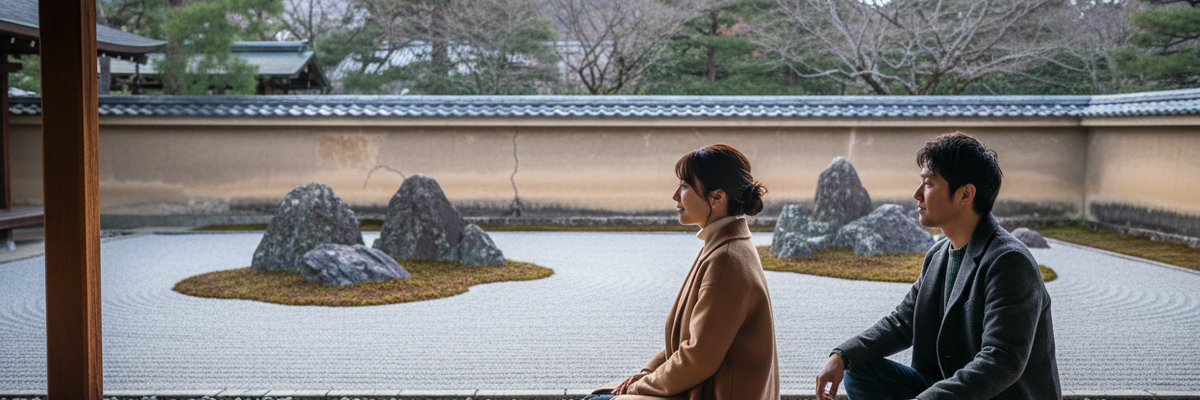
The train ride from Kyoto to Nara lasts less than an hour, but it feels like slipping through a curtain between worlds. Tower blocks gradually give way to low-slung houses with tiled roofs, then to glimpses of wooded hills and temple spires. Arriving in Nara, the air carries a different kind of stillness—quieter, yes, but also resonant, as if centuries of devotion have soaked into the stone paths and moss-covered lanterns. A short taxi ride takes you away from the main tourist arteries, past rice fields and cedar groves, to a small wellness retreat tucked into the outskirts of the city, where modern yoga practice intertwines elegantly with traditional Japanese rituals.
The retreat occupies a lovingly restored wooden house, its dark beams and sliding shoji screens framing views of a pocket-sized garden. When you step inside, you are asked to exchange your shoes for soft house slippers. The tatami mats underfoot give slightly with each step, releasing a faint scent of dried rush grass that is both earthy and clean. Somewhere deeper in the house, a kettle is just beginning to sing. Wind chimes tinkle softly under the eaves. The overall effect is one of entering not a facility but a home that has been waiting quietly for your arrival.
Your first practice takes place in a light-filled room overlooking the garden, where a stone lantern stands sentinel among carefully pruned azaleas and a maple tree tracing delicate filigree against the winter sky. The session begins not with movement but with a bow—hands at heart, eyes lowered—as temple bells in the distance toll the hour in slow, resonant waves. Their sound seems to roll through your chest before fading into the cold morning air. As you move through gentle sun salutations, the tatami’s textured surface grounds your palms and feet; you can feel individual fibers pressing back against your skin, a quiet reminder of the craftsmanship beneath you.
Between flows, your teacher introduces practices drawn from shinrin-yoku, or forest bathing. On a late-morning excursion, you and a small group walk slowly beneath towering cedars in the Nara hills, each step deliberate, each breath invited to deepen. The path is soft with fallen needles, muffling sound. Sunlight filters through the canopy in thin, angled beams that capture tiny motes of dust and pollen, making the air visible. You are encouraged to touch the trunks, to notice the cool dampness of the bark and the faint scent of resin that lingers on your fingertips. Somewhere nearby, a stream chatters over rocks, its clear water catching glints of light like scattered coins.
Back at the retreat, the afternoon is dedicated to the slow ceremony of tea. You are led to a small, family-run tea house on the property, a space that feels more like a generational heirloom than a business. The entrance is low, requiring you to bow as you pass through. Inside, the room is spare but deeply considered: tatami underfoot, a single scroll hanging in the alcove, a flower arrangement so simple—one camellia bloom in a clay vase—that it feels like a meditation. Through the open shoji, you glimpse a private garden scaled to the size of a dream: raked gravel, a moss island, a single stepping stone leading nowhere in particular.
The tea master, a petite woman with silver-threaded hair and an ageless posture, moves with a precision that edges into poetry. Utensils are placed and lifted with deliberate care. Water steams quietly from a black iron kettle, its handle warm and smooth to the touch when she shifts it. The sound of the bamboo whisk against the ceramic bowl is soft but persistent, a rhythmic whisper that seems to slow your heartbeat. When she presents you with a bowl of matcha, its surface a vivid, frothy green, you notice the bowl’s imperfections: a slight notch in the rim, a glaze crackled like fine ice. You raise it with both hands, as instructed, and take a slow sip. The tea is intensely vegetal, almost grassy, with a lingering bitterness that is not unpleasant but grounding, like biting into a piece of very dark chocolate.
Meals throughout your stay echo this attention to detail and seasonality. A simple lunch might consist of grilled fish lightly salted and served with a wedge of lemon, miso soup whose steam carries notes of fermented soybean and kombu, a small dish of pickled daikon that snaps crisply between your teeth, and a bowl of rice that is somehow simultaneously bland and deeply satisfying. The flavors feel restrained, yet they stay with you longer than any heavily spiced dish, like memories you keep revisiting in quiet moments.
As the day wanes, you participate in an evening restorative yoga session that blurs into meditation. Paper lanterns cast a warm, honeyed light over the room, reflecting softly off the polished wood. Outside, the garden shifts into silhouette, the maple branches ink-black against a deepening indigo sky. Somewhere beyond the walls, deer wander through Nara Park, their hooves clicking faintly on stone paths as they move like apparitions between shrines. Temple bells ring again, lower and more resonant now, their vibrations stretching out into the chilly air. Lying in supported savasana, blankets tucked around you, you feel each bell as a gentle ripple passing through your body, easing tension from places you did not realize were clenched.
The retreat’s hidden gem reveals itself on your final morning, when the tea master invites you and one other guest into an even smaller side garden usually reserved for family. It is barely larger than a city balcony, yet somehow contains entire landscapes in miniature: a single stone like a mountain, a patch of moss suggesting a distant forest, a shallow basin catching rainwater that mirrors the sky. You sit in silence on a low wooden step, breath mingling with the pale clouds above, the scent of early plum blossoms drifting faintly on the crisp February air. In this tiny, perfect enclosure, time feels elastic. Your to-do lists and obligations shrink to the size of the pebbles at your feet.
When you finally leave Nara, boarding a train that will carry you back toward the clamor of Kyoto Station and eventually toward home, you carry with you more than souvenirs. You take the feel of tatami under your palms, the echo of temple bells in your chest, the taste of matcha’s gentle bitterness on your tongue. Most of all, you take a new understanding of self-love: not as a grand gesture, but as a series of mindful, deliberate choices—a perfectly brewed cup of tea, a slow walk through trees, a bow to the quiet spaces within you that are always waiting to be noticed.

Across these sanctuaries—from the incense-wreathed heights of North Bali to the red-rock cathedrals of Sedona, from a secret Costa Rican cove to a Himalayan fire pit and a Nara tea house—one truth emerges again and again. Traveling alone is not an act of escape. It is a practice of return. You are not running away from your life, but traveling toward the version of yourself that can meet it with clarity, tenderness, and courage. In a world that celebrates constant connection yet leaves so many feeling unmoored, these retreats offer something quietly radical: time, space, and landscape enough to fall in love with your own company.